

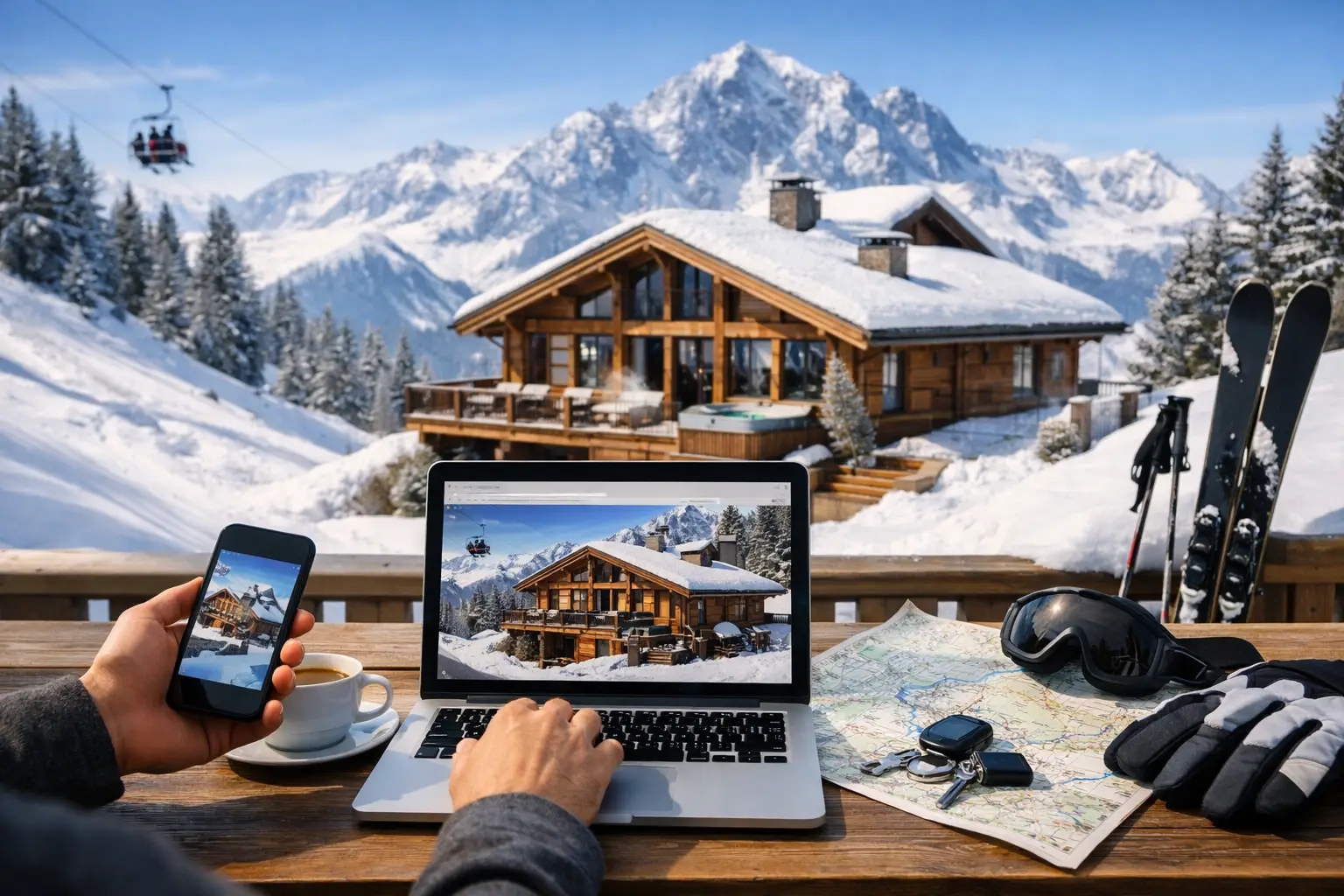
A great ski trip can fall apart long before anyone clicks into bindings. It happens when the chalet is too far from the lifts, the bedroom setup does not suit the group, or the photos promise alpine glamour but the reality feels tired and impractical. If you are wondering how to book a ski chalet well, the real skill is not simply finding availability. It is choosing a property that fits the way your group wants to live for a full week in the mountains.
Luxury chalet bookings ask for a little more judgment than a standard hotel reservation. Privacy, staffing, ski access, wellness facilities, and group dynamics all matter. The right choice creates that rare feeling of effortlessness – mornings run smoothly, afternoons end in a steam room or by the fire, and everyone feels they have enough space to enjoy the trip in their own way.
How to book a ski chalet without costly compromises
The first decision is not the chalet itself. It is the shape of the trip. Before browsing properties, define the non-negotiables: destination, dates, group size, and preferred level of service. That sounds obvious, but many booking mistakes happen because travelers begin with aesthetics and only later realize the layout, location, or hosting style is wrong.
For some groups, true ski-in ski-out access is worth paying for because it removes friction from every day. For others, a short chauffeured drive is perfectly acceptable if it means more square footage, stronger views, or a more private setting. The same goes for amenities. A spa with a pool may be essential for a multigenerational family, while a corporate group may care more about entertaining space, wine storage, and a formal dining room.
Luxury also has tiers within the chalet category. A beautifully designed self-catered stay and a fully serviced chalet with private chef, housekeeping, and concierge support offer very different experiences. Neither is universally better. It depends on whether your group wants independence or a more hosted rhythm.
Start with destination, not decor
It is easy to be won over by interiors, but the resort will shape the trip far more than the sofa fabric. When considering how to book a ski chalet, begin by matching the destination to the people traveling.
France often suits travelers who want extensive linked ski areas, lively resort infrastructure, and a wide range of luxury chalet stock. Austria can appeal to those who value traditional alpine charm, polished hospitality, and villages with a strong social atmosphere. Switzerland is ideal for travelers drawn to prestige, precision, and iconic mountain scenery. Italy has a particular elegance of its own, often blending world-class skiing with a slightly more relaxed sense of style and exceptional food culture.
Then narrow further. Ask whether your group wants a high-energy resort with shopping and nightlife, a discreet village atmosphere, or a destination geared toward families. A glamorous resort can look perfect on paper but feel wrong if half the group wants calm evenings and easy beginner slopes.
Consider the rhythm of the week
A chalet is not just where you sleep. It is where breakfasts linger, boots dry, children unwind, and dinners stretch into the evening. Think about how the week will actually unfold. If your group expects long lunches on the mountain and late dinners at restaurants, a simpler chalet may be enough. If the plan is to entertain privately and spend evenings in, the property itself becomes central to the experience.
That is why location should be measured in lived convenience, not just map distance. Five minutes from the lift can feel effortless, or frustrating, depending on road access, shuttle logistics, and whether your group includes young children or less confident skiers.
Choose the right chalet size and layout
Room count is only the starting point. One of the more overlooked parts of how to book a ski chalet is understanding layout quality. Eight guests can be very comfortable in one chalet and cramped in another, even if both are marketed for the same occupancy.
Pay close attention to bedroom configurations, en suite bathrooms, floor distribution, and the proportion of communal space to sleeping space. A group of couples usually wants parity between rooms, while families may prefer bunk arrangements, family suites, or a children’s floor. If grandparents are joining, stairs and bedroom placement matter more than many travelers expect.
Open-plan living areas can be ideal for sociable groups, but they are not always best for mixed-age parties who need quiet corners and flexibility. A media room, separate lounge, or dedicated play area can make a meaningful difference over a week-long stay. So can practical details such as ski rooms, boot warmers, laundry access, and enough dining capacity for the full group.
Luxury amenities that earn their place
Some features photograph beautifully yet add little to the actual stay. Others transform it. Wellness amenities are a good example. A hot tub with mountain views tends to be used constantly. A serious spa area with pool, sauna, and treatment room can be invaluable after full ski days, especially for larger groups with different schedules.
Similarly, concierge support is not just a premium extra. It can simplify airport transfers, ski fittings, restaurant bookings, childcare, and in-chalet services in ways that protect the quality of the trip. For discerning travelers, convenience is part of luxury.
Understand the service model before you book
Many travelers use the term chalet broadly, but service levels vary significantly. A self-catered chalet offers privacy and freedom, often at a lower overall rate than a fully staffed stay. It works well for guests who prefer to dine out, bring their own chef for selected evenings, or keep the week flexible.
A serviced chalet delivers a more elevated rhythm. Daily housekeeping, breakfast, afternoon tea, a host, or a private chef can change the feel of the entire vacation. It becomes less about managing logistics and more about settling into the mountains with complete ease.
There is also a middle ground. Some properties are offered with light service and optional add-ons, which can suit groups who want both privacy and support. The key is to confirm exactly what is included. Terms such as hosted, catered, and fully serviced are not always used consistently across the market.
Ask better questions before reserving
The quality of a booking often comes down to the quality of the questions asked before confirming. Beyond rates and dates, inquire about what daily life in the chalet looks like.
Ask how ski access works in practice, not just in marketing language. Clarify whether staff are onsite, whether housekeeping is daily, what the chef schedule includes, and whether children’s meals can be arranged. Confirm if spa facilities are private, whether there are noise considerations, and how transfers are handled in snowy conditions.
It is also wise to ask when the property was last renovated and whether the imagery reflects its current condition. In the luxury market, details matter. So does accuracy.
Booking timing matters more than many expect
Peak winter weeks in top European resorts are often secured well in advance, especially for larger chalets with standout amenities. If your dates fall over Christmas, New Year’s, February school holidays, or prime March weeks, early planning is a strategic advantage, not a formality.
That said, booking early should not mean booking quickly without scrutiny. The best outcome usually comes from moving decisively once the right fit is identified, rather than rushing the search itself. A curated platform such as The Chalet Luxe can be particularly valuable here, because the selection is already filtered toward high-end stays that meet a more exacting standard.
Balance value with experience
Luxury travelers are not necessarily looking for the cheapest option, but they are looking for the right value. That is a different calculation. A chalet with a higher weekly rate may prove better value if it reduces transport friction, includes meaningful service, and genuinely improves the group experience.
Private mountain accommodation earns its place when it offers what hotels often cannot: space, discretion, a sense of home, and the ability to shape the trip around your own pace. For families, that can mean easier evenings and more room to gather. For groups of friends, it often means a more sociable, memorable stay. For both, it creates a level of privacy that is hard to replicate elsewhere.
The smartest way to book is to think beyond the headline rate and look at the total quality of the week. A beautiful chalet in the wrong location is still the wrong chalet. A slightly less dramatic property with the right service, layout, and ski access may deliver a far better experience.
When you approach the process with that level of clarity, booking becomes less about chasing availability and more about securing the version of the Alps that feels entirely your own. That is usually when the trip starts to feel exceptional, well before arrival.

Join The Discussion