

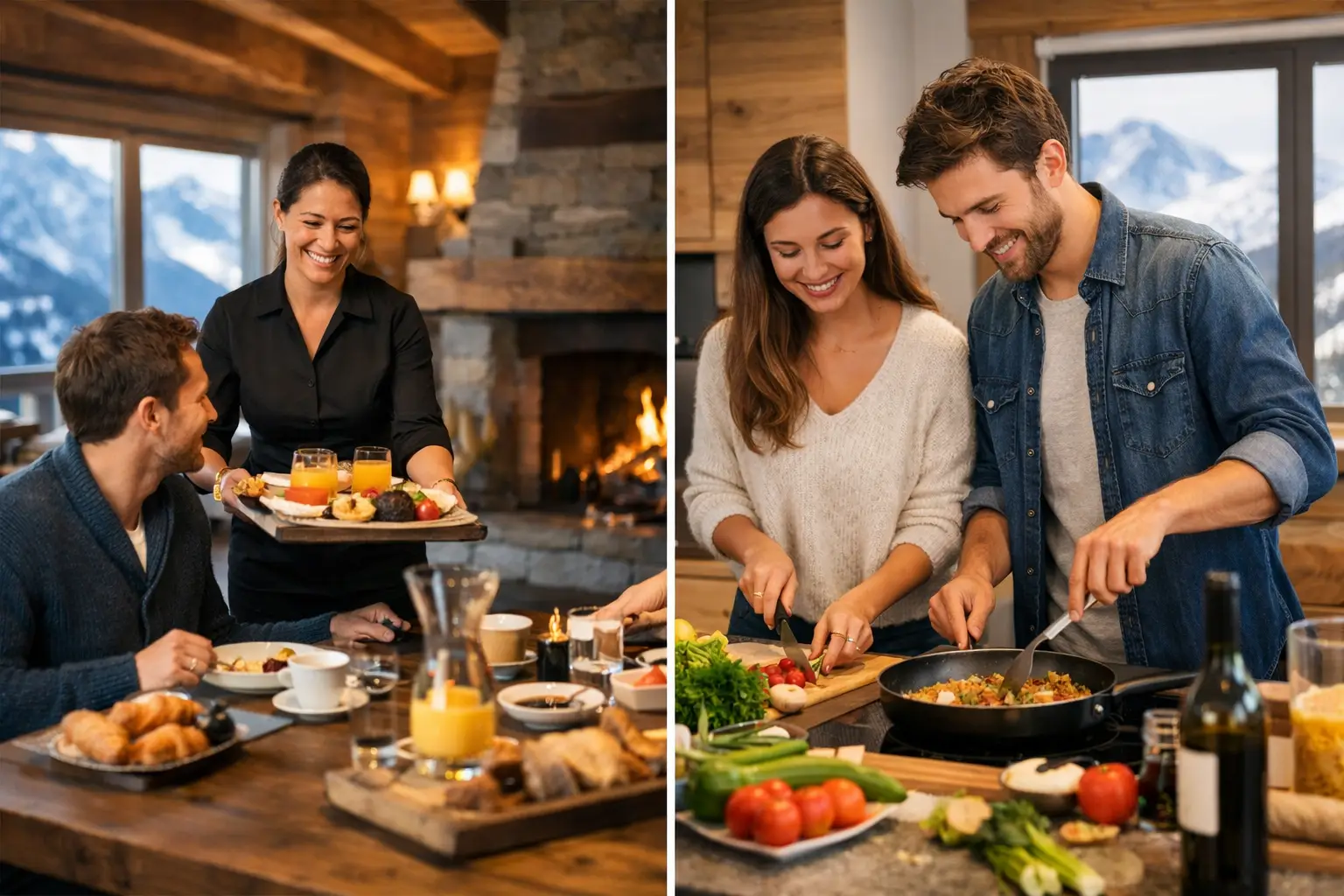
The difference between a good ski holiday and an exceptional one often comes down to how the week feels once you arrive. That is why the choice of serviced chalet vs self catered matters more than many travelers expect. Both offer privacy, space, and a more residential alpine experience than a hotel, but they create very different rhythms from the moment you wake up to the final evening by the fire.
For some guests, luxury means a chef preparing breakfast while ski gear dries and the day unfolds without logistics. For others, luxury is having a beautifully designed chalet entirely to themselves, with the freedom to eat, entertain, and move at their own pace. Neither option is universally better. The right choice depends on how you travel, who you are traveling with, and what you want your time in the mountains to feel like.
Serviced chalet vs self catered: the core difference
A serviced chalet includes hospitality as part of the stay. Depending on the property and level of service, that can mean daily housekeeping, hosted breakfasts, afternoon tea, a private chef, concierge support, driver service, or a fully staffed team managing the week. The atmosphere is private, but it carries many of the comforts people associate with a refined boutique hotel.
A self-catered chalet gives you the property without the built-in staffing structure. You have the same sense of exclusivity, the same private living areas, and often the same striking amenities such as hot tubs, saunas, cinema rooms, and mountain-view terraces. The difference is that meals, household flow, and day-to-day planning sit with you, unless you arrange additional services separately.
In practical terms, this is not simply a question of food. It is a question of how much support you want built into the experience.
What a serviced chalet really delivers
For many luxury ski travelers, a serviced chalet is less about extravagance and more about ease. A ski holiday has moving parts – lift schedules, equipment, transfers, lunch plans, children, weather, restaurant reservations, and changing plans when snow conditions shift. A properly serviced chalet absorbs much of that friction.
Mornings are usually the clearest example. Instead of organizing breakfast, clearing up, and coordinating who needs to be where, the household begins with a sense of calm. Coffee appears when it should. Meals are timed around skiing. Returning in the afternoon feels restorative rather than administrative.
This format especially suits multi-generational families, celebratory groups, and hosts who want to spend time with guests rather than managing them. If you are traveling with children, the convenience can be substantial. If you are traveling with friends for a milestone trip, service helps preserve the feeling of occasion.
There is also a social advantage. In a serviced chalet, evenings can become more polished and more relaxed at the same time. Drinks by the fire, dinner in a private dining room, and the ability to enjoy the atmosphere without anyone taking a turn in the kitchen creates a different standard of stay.
That said, service comes with structure. Meal times may be agreed in advance. Staffing presence, however discreet, changes the dynamic of the house. For travelers who prefer absolute informality or spontaneous plans every day, that can feel less natural than a fully independent setup.
Why self-catered chalets remain so appealing
A self-catered chalet appeals to guests who value autonomy as highly as comfort. You set the tone of the week. Breakfast can be early, late, elaborate, or skipped altogether. One evening might involve a long lunch on the slopes followed by simple food at home. Another might turn into a private dinner party if you decide to bring in a chef for one night.
This flexibility is often attractive for experienced alpine travelers who know the resort well and already have favorite restaurants, ski routines, and local contacts. It can also suit families who prefer familiar mealtime patterns or groups with mixed schedules, where some want first lift and others want a slower start.
There is a financial dimension too. In the luxury market, self-catered does not mean basic. It can still mean extraordinary architecture, prime location, wellness facilities, and exceptional interior design. The difference is that your budget is directed more toward the property itself and less toward full-time service. For some groups, that creates better overall value.
The trade-off is straightforward. Freedom is appealing, but someone still has to think about groceries, reservations, tidying, and meal planning unless outside help is added. On paper, those tasks can seem minor. During a ski week, they have a way of becoming more noticeable.
Service level changes the pace of the trip
When travelers compare serviced chalet vs self catered options, they often focus first on price. A better question is how you want the week to move.
A serviced stay tends to feel smoother and more continuous. The holiday begins quickly because practical matters are already in hand. You are not stocking the kitchen on arrival or deciding who will cook after a long travel day. There is less switching between leisure mode and household mode.
A self-catered stay has a more independent rhythm. That can be exactly what some guests want. It feels personal, private, and less choreographed. You can keep plans loose, eat out whenever you like, and shape the chalet experience around your own habits rather than a hospitality framework.
For a short stay, the convenience of service can feel especially worthwhile because every day counts. For a longer trip, self-catering can feel more residential and settled, particularly for families who want the chalet to function as a true home in the mountains.
Which option suits your group best?
Group makeup matters as much as budget. A couple booking a quiet ski escape may love the elegance of a serviced chalet, particularly if the goal is to switch off completely. But that same couple might prefer self-catered privacy if they intend to spend most evenings exploring the resort.
Families often benefit from service more than they initially expect. Younger children add layers of scheduling, meals, equipment, and downtime. Even limited housekeeping and breakfast support can make the week considerably more relaxed. For larger family gatherings, the value of a chef and hosted environment rises quickly.
Friend groups are more mixed. Some want the energy of a fully hosted private house, where the trip feels elevated from the first champagne reception to the final dinner. Others prefer a freer setup, especially if they are spending heavily on ski guiding, après-ski, and dining out.
Corporate retreats and celebratory occasions usually lean toward serviced properties because hosting standards matter. Privacy is still there, but the guest experience feels more polished and less dependent on anyone in the party taking responsibility for logistics.
Luxury is not one thing
This is where many comparisons fall short. They assume service defines luxury. In reality, luxury can mean immaculate hospitality, but it can also mean discretion, space, and the privilege of doing things entirely your way.
A serviced chalet expresses luxury through care, attentiveness, and refinement. A self-catered chalet expresses luxury through independence, design, and personal control. In elite alpine destinations, both can be exceptional. The question is not which one sounds more premium. It is which one aligns with your version of a successful holiday.
For travelers browsing curated portfolios such as The Chalet Luxe, this is often the most useful lens. Start with the experience you want, then choose the service model that supports it. The best chalet is not just beautiful. It fits the tempo, expectations, and social style of your trip.
How to decide without overthinking it
If the idea of planning meals, managing the household, or coordinating details feels even slightly tedious, you are probably a serviced chalet guest. If your ideal trip includes privacy with very little operational effort, service earns its place quickly.
If, on the other hand, you enjoy shaping the week yourself and want the chalet as a luxurious base rather than a fully hosted environment, self-catered may be the better match. This is especially true if your group likes spontaneity or intends to spend significant time dining around the resort.
There is also a middle ground. Some self-catered chalets can be enhanced with added housekeeping, private chefs on selected nights, or concierge support. That hybrid approach works well for travelers who want flexibility without taking on every detail personally.
The smartest choice is rarely the most elaborate one. It is the one that lets you enjoy the mountains in the way you actually want to live in them. Choose the stay that gives your mornings less friction, your evenings more pleasure, and your group the kind of comfort they will remember long after the snow has melted.
Join The Discussion