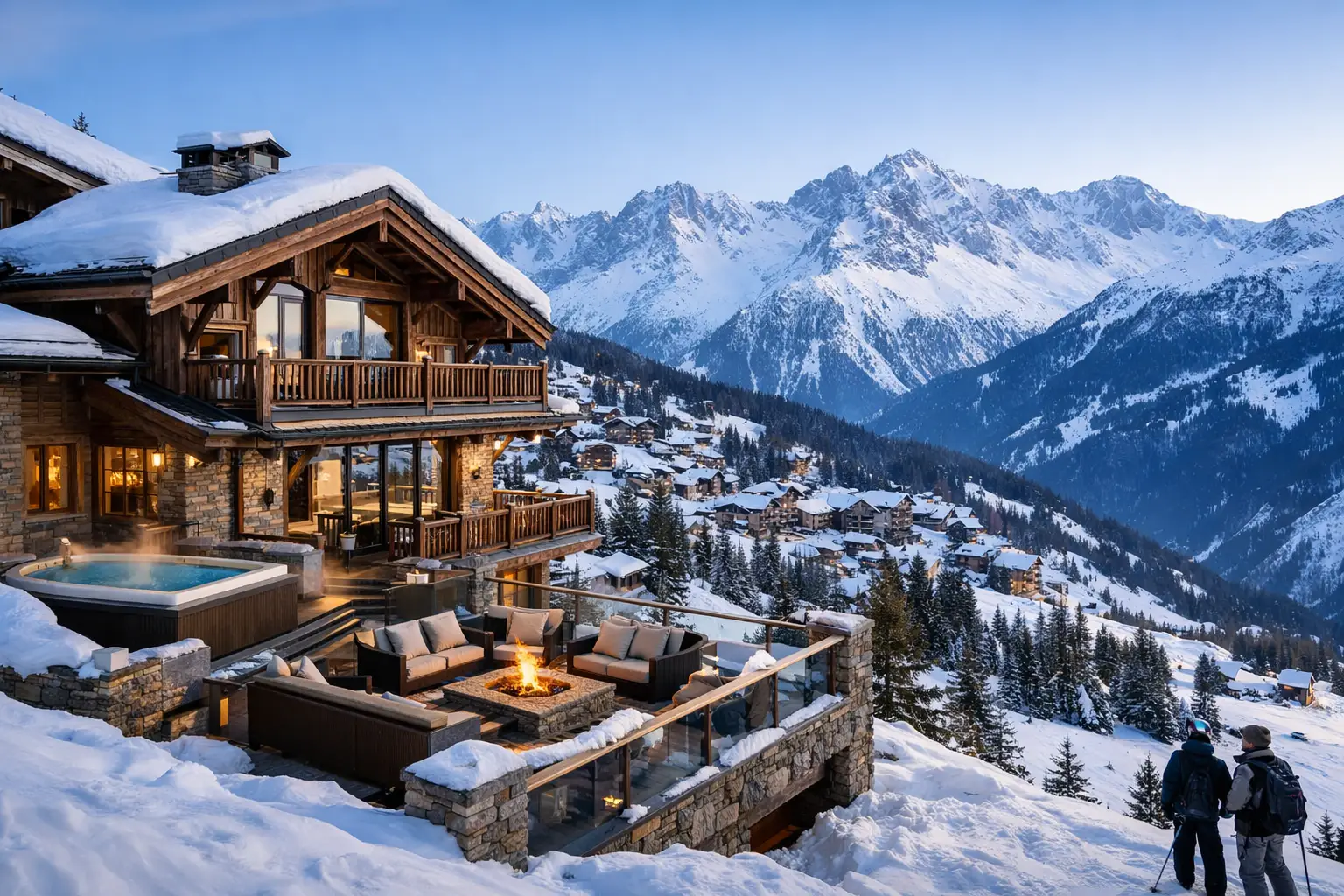
Courchevel rewards precision. In a destination where one chalet may place you steps from a prized piste and another leaves you reliant on daily drivers, small differences shape the entire stay. That is why a courchevel chalet review guide matters most before you book, not after arrival. For guests planning a refined ski week, a family holiday, or a private group retreat, the right property is less about headline luxury and more about how location, layout, service, and amenities work together.
What a Courchevel chalet review guide should actually assess
At this level, almost every chalet presents well in photography. You can expect attractive interiors, generous bedrooms, and polished alpine styling across much of the premium market. The distinction lies in usability. A truly exceptional Courchevel chalet does not simply look expensive. It feels effortless from the first evening onward.
That means a useful review process should move beyond surface appeal. You are not only evaluating finishes, spa areas, or mountain views. You are assessing whether the property suits the rhythm of your trip, the profile of your group, and the standard of service you expect. A ski-focused family with children, for example, will not review a chalet in the same way as a corporate group hosting clients or a multigenerational party prioritizing privacy and wellness.
Location defines the experience
Courchevel is not one uniform destination. Each village offers a different balance of prestige, convenience, atmosphere, and value. Any serious courchevel chalet review guide has to begin here.
Courchevel 1850
This is the most prestigious address and often the first choice for travelers who want immediate access to elite boutiques, notable restaurants, and prime ski connections. Chalets in 1850 command a premium because they compress everything into a tighter radius. For some guests, that premium is justified by convenience alone. For others, especially those who prefer a quieter base, the social pace can feel less private than expected.
Courchevel 1650, 1550, and Le Praz
These areas can offer stronger value relative to space, particularly for larger groups. You may secure a broader floorplan, more extensive wellness facilities, or a more secluded setting than a similarly priced chalet in 1850. The trade-off is usually access. Some properties are still very practical for skiing, but the phrase ski-in ski-out should be examined carefully. A short walk in ski boots or a chauffeured transfer may be manageable for some groups and a daily irritation for others.
A refined review asks simple questions. How close is the nearest lift in real terms, not broad marketing language? Is the return ski route reliable in changing snow conditions? How long does it take to reach dinner reservations or après-ski venues? In Courchevel, a few minutes matter.
Layout matters as much as luxury
A grand chalet can underperform if the layout is wrong for the group. One of the most common booking mistakes is choosing based on bedroom count alone.
Bedroom configuration and privacy
Multiple en-suite bedrooms are the baseline for premium travel, but configuration still matters. Are the principal suites positioned apart from children’s rooms? Do all guests receive comparable privacy, or are a few rooms notably secondary? If you are traveling with another family, several couples, or staff, balanced room quality helps avoid a hierarchy that becomes more obvious once everyone arrives.
Living spaces that support the stay
Open-plan salons photograph beautifully, but acoustics, seating, and flow are what shape evenings in residence. If your group intends to spend significant time entertaining privately, look at whether the dining table comfortably seats the full party, whether there is genuine lounge space around the fire, and whether the bar, cinema, or terrace feel integrated rather than decorative.
For family groups, separation can be just as valuable as togetherness. A media room, children’s bunk area, or secondary sitting room allows different generations to occupy the chalet comfortably without sacrificing the sense of a shared stay.
Amenities should serve real use, not just presentation
Luxury chalets in Courchevel often feature spas, pools, hammams, gyms, wine cellars, and cinema rooms. These are meaningful only if they are well executed.
An indoor pool sounds compelling, but dimensions matter. Some are designed for relaxation rather than swimming. A spa area may be elegant yet compact, ideal for a couple but underwhelming for a 10-guest party returning from the slopes at the same time. Likewise, a ski room should be heated, organized, and practical enough to handle a group’s equipment without turning departure each morning into a bottleneck.
The best reviews focus on the amenities guests will actually use every day. A beautifully designed wellness floor can elevate the stay, especially in poor weather or for non-skiers. But if your group skis hard from first lift to last run, immediate slope access and a high-functioning boot room may matter more than a treatment suite.
Service level is where premium value becomes clear
In top-tier alpine rentals, service often determines whether a chalet feels merely expensive or genuinely exceptional. Yet service can vary significantly even among properties with similar nightly rates.
Staffed, catered, or self-contained
Some chalets offer full staffing with private chefs, hosts, chauffeurs, and daily housekeeping. Others provide a lighter service model with housekeeping and concierge support but no in-house culinary team. Neither is inherently better. It depends on the kind of stay you want.
For celebratory trips or guests who value a highly managed experience, full staffing creates ease and privacy. Breakfast, après-ski service, and dinners at the chalet reduce logistics and preserve the pace of the holiday. For travelers who prefer flexibility and intend to dine out often, a more lightly serviced chalet may be the smarter choice.
Concierge quality
A polished concierge operation should be able to coordinate ski instruction, restaurant reservations, childcare, airport transfers, massage treatments, lift passes, and equipment fittings without friction. In Courchevel during peak weeks, this is not a minor benefit. It is often the difference between a smooth itinerary and a compromised one.
A credible review should consider how responsive and informed the support team is before arrival. Fast, precise pre-arrival communication is usually a strong indicator of how the stay will be handled once in resort.
Design and finish still matter
While function leads the review, design should not be dismissed. Courchevel attracts guests who expect an elevated visual experience, and the best chalets combine mountain warmth with contemporary restraint.
Look for coherence rather than excess. Premium materials, generous natural light, strong mountain-facing living areas, and a considered palette tend to age better than trend-driven interiors. If a chalet aims for spectacle, it should still feel comfortable at night, after skiing, when the fire is lit and the group settles in for hours rather than minutes.
There is also a question of authenticity. Some guests prefer classic Savoyard detailing and a traditional alpine atmosphere. Others want a cleaner, more modern residence with spa-like calm. Neither approach is superior. What matters is that the design aligns with your expectations of luxury.
How to judge value in a premium market
A high rate alone does not signal top value, and a lower rate does not always indicate compromise. In Courchevel, pricing is influenced by timing, snow season, exact village, staffing model, and the rarity of the chalet itself.
The smarter review looks at value per experience rather than price in isolation. A chalet with stronger access, better staffing, and a more efficient layout may justify a higher weekly cost because it improves every day of the stay. By contrast, a larger but less practical property can feel expensive if transport logistics, uneven bedrooms, or underwhelming service create friction.
For many luxury travelers, the most valuable chalets are not the flashiest. They are the ones that deliver privacy, rhythm, and comfort without requiring constant adjustment from the guest.
Red flags to notice before you commit
Descriptions that rely heavily on prestige language but remain vague on specifics deserve scrutiny. If ski access is not clearly defined, if room configurations are incomplete, or if service inclusions are described too broadly, ask for detail.
Photography can also conceal scale. Wide-angle images may make living rooms, pools, or bedrooms appear more expansive than they are. Floorplans, exact bedroom descriptions, and clarification on staff arrangements are worth requesting, particularly for groups with complex needs.
Finally, pay attention to how the booking process feels. A specialist luxury platform such as The Chalet Luxe should be able to advise not just on availability, but on fit. In this segment, informed guidance is part of the product.
The right chalet is the one that fits your version of Courchevel
Some guests want direct slope access in the heart of 1850 with a dedicated team handling every detail. Others want a quieter setting, more space, and a calmer pace for long lunches, spa afternoons, and private evenings in. Both can be excellent choices.
The most useful Courchevel chalet review guide is not the one that declares a single type of property best. It is the one that helps you judge which chalet will make your own week in the mountains feel easy, private, and exceptionally well chosen. Book with that standard in mind, and the destination tends to deliver exactly as it should.
Join The Discussion